2013 CIR Central Coast Natural History Tour
We are glad to provide a few photos from Channel Islands
Restoration’s recent Central Coast Natural History Tour. Geologist Tanya Atwater and botanist Steve
Junak joined us on a four-day tour, following the San Andreas Fault north to Hollister,
CA then south along the Big Sur Coast. CIR
leads natural history educational tours
to exceptional locations in southern and central California with leading
naturalists. For more information on our three reoccurring trips (held in the
spring to early summer) visit our tour web site: http://www.cirweb.org/nht

The tour begins at Port San Luis (Avila Beach). We walked, climbed on, and explored the pillow
basalts and lava flows of a world-class example of ancient oceanic crust. Tanya
Atwater has been on submersible dives, miles deep to study how the present-day
ocean floor is being formed at sea floor spreading centers. She described her
adventures to us and shared her insights into the processes that formed the
various exotic features encountered at this site. This may be the world's best
location to visit the deep sea floor in the sunshine.

Next stop: Montana de Oro State park. This was a great beach
stop. It is surrounded by the cut faces of huge uplifted marine terraces and it
contains a sweet, small erosional remnant of a terrace that we checked out close
up. The terraces are very strong evidence of the ongoing rising of the land
that is so common along the California coast. Views of the higher hills showed
a whole staircase of uplifted terraces, formed as ice age sea level
fluctuations interacted with the steadily rising land. The road to Montana de
Oro featured a fantastic view of Morro Bay and Morro Rock. We also enjoyed golden yarrow in bloom!

After setting up camp at Morro Bay State Park (some
participants checked into motels), we visited Morro Rock. This huge "rock" is a plug of frozen
lava that solidified in the throat of an ancient volcano. Its materials are
much stronger than the surrounding rocks, so that it was left standing when the
rest eroded away. Morro Rock is the northernmost of the "morros" that
form a line of tall hills between here and San Luis Obispo, probably formed
over a long crack in the earth. Its age of about 23 million years ago
corresponds to the time when the San Andreas Fault system was first breaking into
the land.

After several other stops, we ended up in Parkfield. As we approached this sweet ranch town, we
examined an interestingly deformed bridge, then cross over the San Andreas Fault
from the Pacific plate to the North American plate. We learned about the
Parkfield earthquake prediction experiment and about the deep drilling,
fault-crossing experiment.

We then stayed the night at Pinnacles National Park. This
park is centered around a huge heap of broken rocks that have been offset from
a volcano whose lava flows lie in the Mojave desert. They have been shifted 325
km northwestward along the San Andreas Fault sometime since 23 million years
ago. We hiked up stunning wooded trails with Steve and Tanya. We spent the night at the East Pinnacles National Park campground
(some in hotels in Hollister).
We spent an hour walking up and down the streets in the old
neighborhoods of Hollister, tracing the Calaveras Fault as it crosses and
deforms sidewalks, curbs, buildings, telephone poles, etc.


We then explore Point Lobos State Reserve. We walked into
the park and enjoy this beautiful natural treasure. We explored rocks that were
deposited in an offshore submarine canyon and seek out trace fossils left
behind by the Eocene creatures that lived there. We experienced a rare, native
Monterey Cyprus grove and other botanical wonders. We looked for otters, sea
lions and birds and enjoyed the many breathtaking views. Steve
Junak led us on a great botany walk!
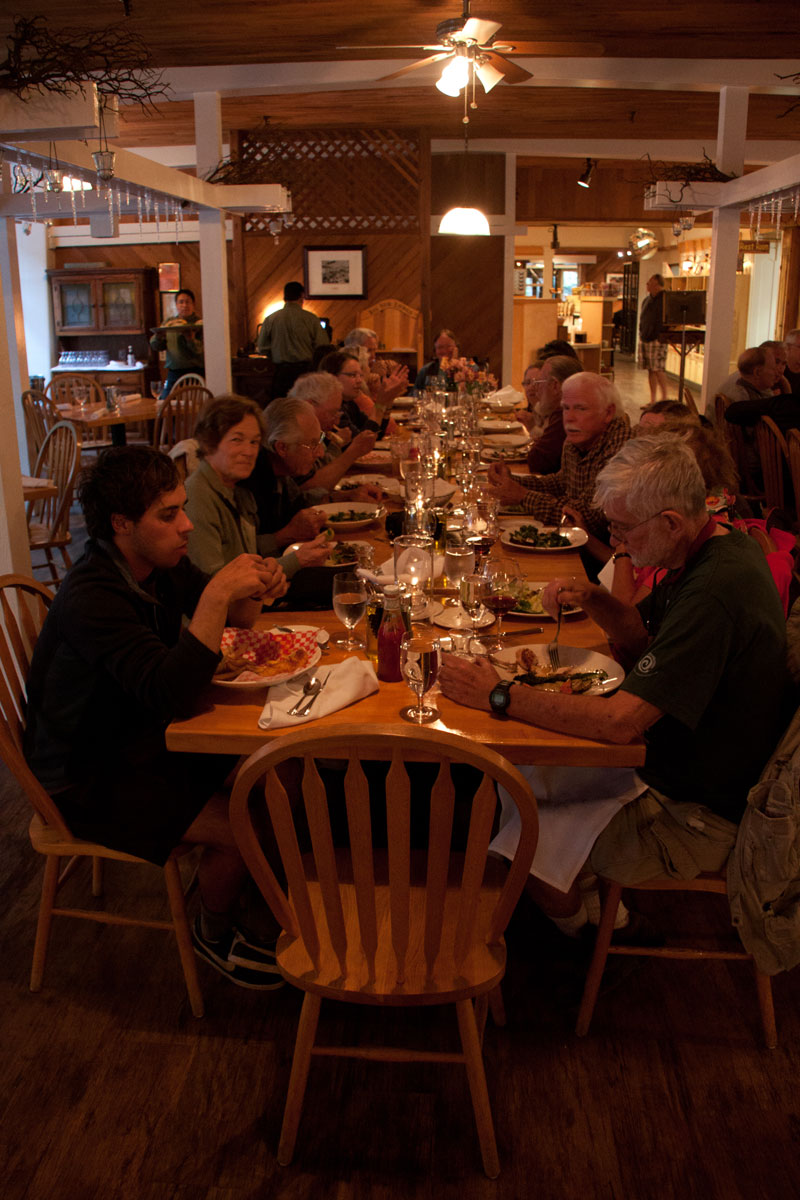
We drove south along Highway one, checked into Pfeiffer Big
Sur State Park (or hotels) then enjoyed dinner at the Big Sur Lodge.

We drove south along Highway one, checked into Pfeiffer Big
Sur State Park (or hotels) then enjoyed dinner at the Big Sur Lodge. The next morning we enjoyed a hike at Julia
Pfeiffer Burns State Park. This cliff-top park was the home of early Big Sur
settlers. We enjoyed a waterfall leaping into its pocket beach and enjoyed
incredible ocean views.

Further down Highway One, we spotted a California Condor! We then drove the Nacimiento-Fergusson Road to the crest of the range, taking in spectacular views of the coast and the Los Padres National Forest. Steve Junak led us on a plant walk in the Coast Redwoods. We were treated to a great view of a pygmy owl!


We were then treated to a specially arranged tour of the Point
Piedras Blancas Lighthouse. This historic location is a great place to admire a
very successful native plant restoration project. We enjoyed its great coastal
views and bird populations and explored the old buildings and equipment of this
long-functioning lighthouse.


White-crowned sparrow in native Lupine at the Point Piedras
Blancas Lighthouse

View from the top of the Point Piedras Blancas Lighthouse

View from the top of the Point Piedras Blancas Lighthouse


(s).jpg)
